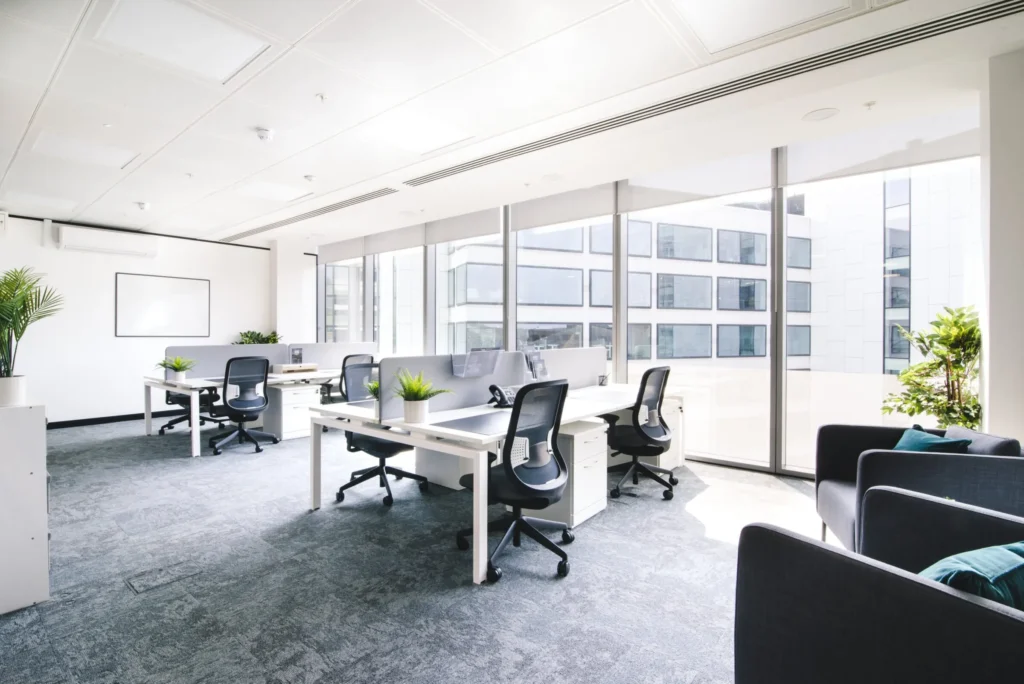
I visited two different offices last week and took note of how much things have changed in the last few years. The first thing I noticed was half the offices were not in use. It was quiet. No one was using a phone and, in fact, few people were talking. A limited crew was obscured behind large computer monitors. The once-ubiquitous rows of cubicles, bright fluorescent lights, and office chatter were absent. In just four years, the office has clearly changed.
For most of the last century, the traditional office served its purpose: it was an address. A location for employees to arrive at the same time, perform their duties, adhere to a company’s policies and procedures, and check out at closing time. A post-pandemic world and a digital revolution, however, combined with a growing understanding of work-life balance and employee engagement, has forced a reevaluation of the office’s purpose.
It took the rise of remote work to demonstrate that productivity doesn’t necessarily require physical presence. The pandemic was an unimaginable tragedy, but it led to a realization that has liberated many employees from a daily commute and rigid schedule. It also prompted companies to question the need for large, expensive office spaces.
The office of today and even more so tomorrow, will be less about individual workstations and more about opportunities to foster connection. If your office has not yet shifted, expect open layouts, collaboration zones, and social interaction areas to become increasingly common.
The focus now is on creating environments that encourage teamwork, brainstorming, and the exchange of ideas. If not already there, comfortable lounge areas, high tech meeting rooms, on-site cafes and gyms, and even napping pods will be in your future. The office is transforming into a destination… a place employees want to go.
Two Factors Driving the Transformation:
- While virtual communication has its place, it can’t fully replicate the dynamic energy of in-person collaboration. Companies are recognizing the importance of face-to-face interaction for building relationships, fostering a sense of community, and driving innovation.
- The office is becoming a crucial tool for attracting and retaining top talent. In a competitive job market, companies are using their office spaces as a way to showcase their commitment to employee well-being. A well-designed office, equipped with employee engagement accelerators is becoming a powerful differentiator.
Challenges of the Transformation:
- No one said this transformation would be easy. Companies need to consider the needs of their employees far more than in previous years. In the past, limited thought was given to employee engagement when offices were constructed. Today, it’s all about employee engagement and interaction. Certainly, a positive development.
- Companies combining remote/hybrid workers with in-person office workers must also ensure equitable access to office resources. Not always an easy task with so many different departments, especially at large companies.
Looking ahead, it’s not hard to imagine more flexible and adaptable spaces, incorporating technology to support hybrid work models. The office of the future will become a hub for learning, offering opportunities for employees to connect, collaborate, and grow. It will be the source of a company’s brand and a space that inspires creativity and belonging. Sounds good to me! SP
Are you having difficulty finding talented employees to fill your open positions? With 25 years of experience, a 4.8 Google rating, an average experience level of 22 years, our own Thought Leadership Team, and an A+ rating from the BBB, you will quickly see why we’ve built so many permanent, long-term client relationships. Visit our website at www.execsallied.com/employers or Email us at info@execsallied.com. We are here to help!